
Villa Vinea – Leveraging Value from Modern Wine Production
Castel Vinum is a winery in Mureș County adopting a circular business model by valorizing grape marc and pruning wood. Grape seeds and skins from marc are reused for high-value products, while wood waste is transformed into planting material and biomass, reducing waste and enhancing sustainability.
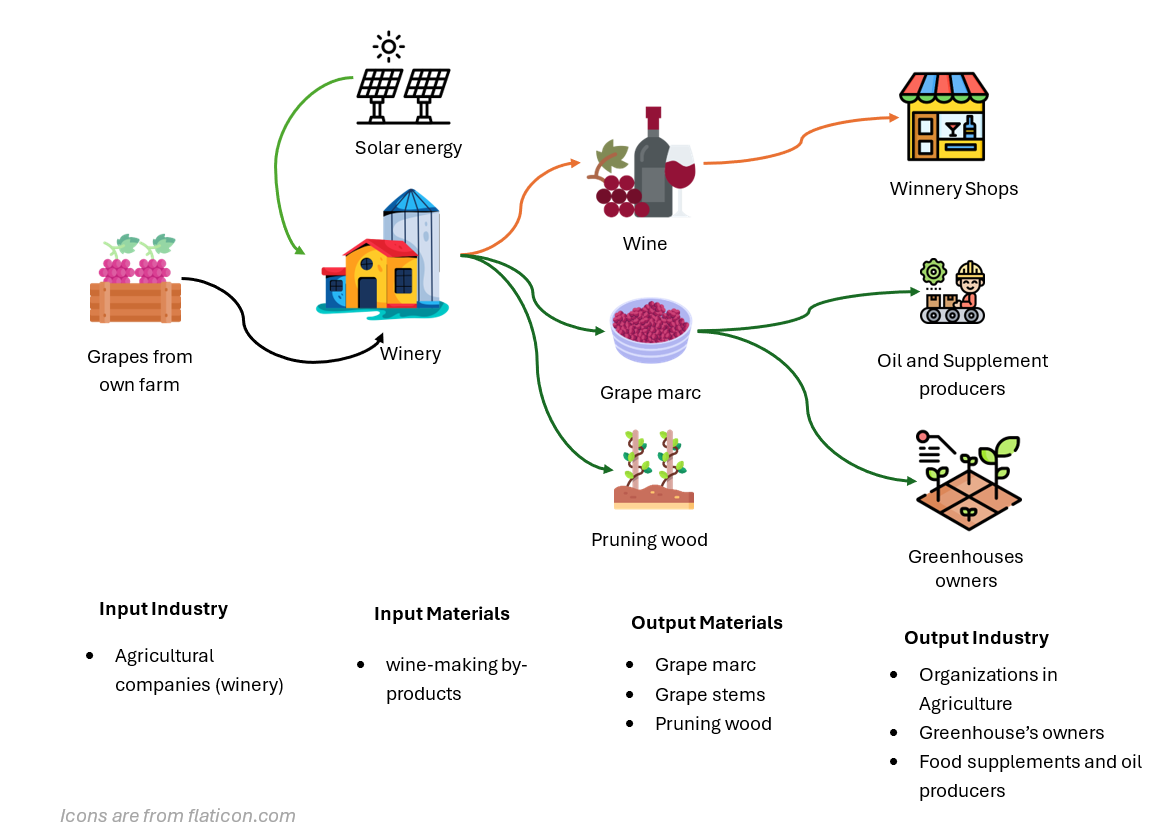
Villa Vinea brand, is a modern winery located in Mica, Mureș County, Romania. Established in 2004, the company cultivates vineyards on more than 60 hectares using sustainable viticultural practices, modern technology and a qualified local management team. The winery produces premium wines and continuously invests in ecological improvements, including renewable energy from its photovoltaic system, natural cooling due to the hillside construction of the cellar, and agricultural practices that reduce chemical inputs and promote soil regeneration. A key factor in shifting to a Circular Economy at Castel Vinum is making better use of wine-making by-products, which account for about 20% of processed grapes. Traditionally used as fertilizer, materials like grape marc (skins, pulp, seeds), stems, and pruning wood are now being repurposed: grape seeds are sold for oil production, grape marc is distilled into spirits, skins supply natural extracts, and stems provide cellulose and tannins. Pruning wood is partly used as nursery material for vineyards, and the rest as biomass. These measures help Castel Vinum create new products, lower environmental impact, and boost regional economic and social benefits.
Reuse
Leftover peels and other organic waste from production are repurposed as natural compost or sold as feedstock, supporting circularity in food production.
Reduce
By directing grape seeds to oil producers, using grape marc for distillation, and converting pruning wood into planting material and biomass, the winery creates additional value loops and reduces waste.
Remanufacture
The chemical composition of grape components (lipids in seeds, pigments and antioxidants in skins, cellulose and lignin in stems) enables their transformation into high‑value products such as grape seed oil, natural antioxidant extracts, cellulose/tannin inputs and distillates, extending the useful life of the original raw material.
Environmental Impact
Valorizing grape by‑products reduces organic waste and the need for external inputs, while renewable energy use and reduced chemical treatments in the vineyard lower emissions and pressure on natural resources.
Economic Impact
New revenue streams arise from selling grape seeds for oil, tescovină for distillation, planting material from pruning wood and potential antioxidant or cellulose products. This complements wine sales and supports investment in further circular innovations.
Social Impact
The circular business model supports local employment, stimulates collaboration with regional partners (oil producers, biomass users) and reinforces the role of Castel Vinum as a responsible actor in the local community.
Sustainability Goals addressed
Business Model Experts: ALUMNI Asociation of Petru Maior University
Organisation: Villa Vinea